Referrals Check You Out Before You Even Know They Exist
TL;DR
When someone refers you, the prospect is looking you up before they reach out. They visit your website and read your content before you even know they exist. You want your content to help them see you’re the right fit as their coach, and that doesn’t happen with an old website, abandoned content, or mixed or generic messaging.
I’ve seen leadership coaches who seem to have a complicated relationship with creating content. They’ll go all in for a while, then stop abruptly. No more emails, no more posts.
I’ve found the problem is usually that they’ve got enough work and don’t “need” leads because they have referrals.
Everyone in business knows referrals are what you want. They’re the easiest to convert because they already have a reason to trust you. But notice they have a reason to trust you - not that they automatically trust you.
The content you produce- emails, videos, posts, or podcasts helps further establish that trust and helps convert them to a client.
Because the truth is, it’s hard to convert a referral you never knew existed.
What Happens When Someone Refers You?
When someone is given your name as a referral, they aren’t going straight to the “book a discovery call” button on your website. They look around to learn more about you.
Think about it this way: when a friend tells you about the perfect pair of shoes, you don’t just go add to cart. You check them out and see if they’re your style, the level of comfort you’re used to, and if they have good reviews from others.
This is how potential clients look at your content to see whether you understand their situation, their process, and whether it feels like a fit.
Can Content Help the Person Referring You?
When you have content, it helps someone referring you explain what you do. Would you rather someone refer you saying, “She helps leaders get unstuck,” or “She helps veteran C-Suite leaders get clear on the later years of their career”
Content also gives someone referring you something specific to forward. They can easily forward one of your newsletters or a post that caught their attention.
What Kind of Content Helps a Referral Decide if Your Services are the Right Fit?
If you get a lot of referrals, your content can lean more toward what resonates with them, like:
Client questions, which show you understand their situation
What you wish your ideal client knew, which shows your POV
Stories from your experience, which show how you work with people
With referral content, you don’t need to show them they have a problem. Instead, you can confirm their problem, build trust, and highlight your expertise.
Avoid content that focuses on tips, especially when speaking to referrals. Leadership tips can come from anyone - even AI - and don’t help a prospective referral see you and how you work. Tips don’t show the results clients have gotten or your process to getting them there.
What if Your Referrals Slow Down?
The content that confirms referrals also brings in inbound leads. While you’ve been creating this content when you don’t “need” it, it’ll bring in leads when you do. It’s one content system doing two jobs - not two separate strategies.
How Do You Keep Producing Content When Client Work Comes First?
Set a realistic cadence that considers your capacity and your audience’s interest. I typically recommend at least one LinkedIn post per week, and a fortnightly email. This is often enough that it’s not overwhelming nor is it forgettable for your audience.
To capture content ideas, I use a mind map in MindMeister (screenshot example below) while I’m working. Use anything you can find easily and reference often to capture ideas that will come up - undoubtedly during a session, a walk, or a workshop. Organize your ideas by:
Questions your clients often have
Things you wish your ideal client knew
Stories from your experience and point of view
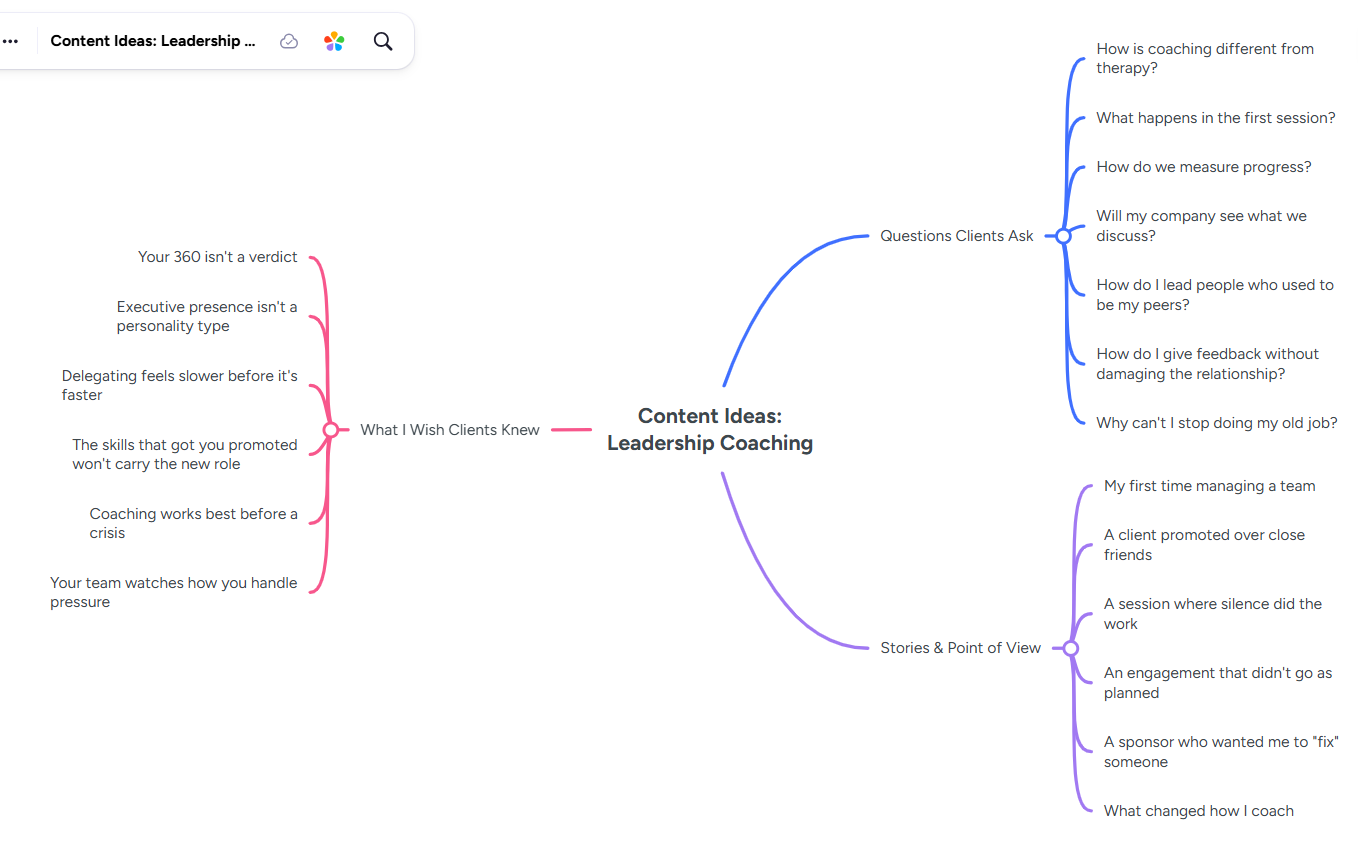
Simply rotate your content between the three topics.
Choose a consistent time to create your content and a consistent time to publish it. Always leave some space between content creation and publication - even with AI. That way, you’ll have fresh eyes when you review it and can catch anything you’d like to correct before it goes out.
An Email Tip for Referral Sources:
Email keeps you top of mind with past clients, who are your referral sources, and also helps nurture leads. Use email to connect with what’s going on in your life and business now.
Example: Last month your son ran for treasurer at his school, and he lost. Rather than coach him on his perspective or feelings, you held space for him and asked questions when the time was right. Then you tie this back to how you coach.
FAQ
Q - Do I need to post on LinkedIn if all my clients come from referrals and word of mouth?
A - It’s tempting to think LinkedIn posts are useless if you’re getting referrals. But LinkedIn posts are a good place to share your thoughts and experience in a more conversational way. A referral will visit your LinkedIn profile and see more of your personality in posts, which helps them “get to know you” before they even speak with you.
Q - How often should I post if content is mainly for referral confirmation?
A - Once a week is enough to look current and engaged to anyone who looks at your profile and posts.
Q - What if my last post was months ago?
A - No problem - just jump back in. For example, the most recent post is the first thing a referral sees, so the next one you publish replaces the drop-off point.
Q - Should I send content to past clients?
A - If you wrote a piece of content that is relevant to them and you have a good relationship with them, I’d say yes. I would not send it to fish for referrals or for them to share it on their platforms, however.
What Will Your Next Referral Find?
Visit your website and LinkedIn profile and look at them as if you were someone who was just given your name. Would you know who you help, how you approach your work, and whether you’re the right coach for them?
If you’re unsure, I’ll take a look with you. You can email me at krystal@verummarketing.com or message me on LinkedIn.